
Navigating Global Trade: The Ultimate Guide to Digital Freight Forwarding and Smart Customs Clearance
Ahmed WL
7/19/20264 دقيقة قراءة

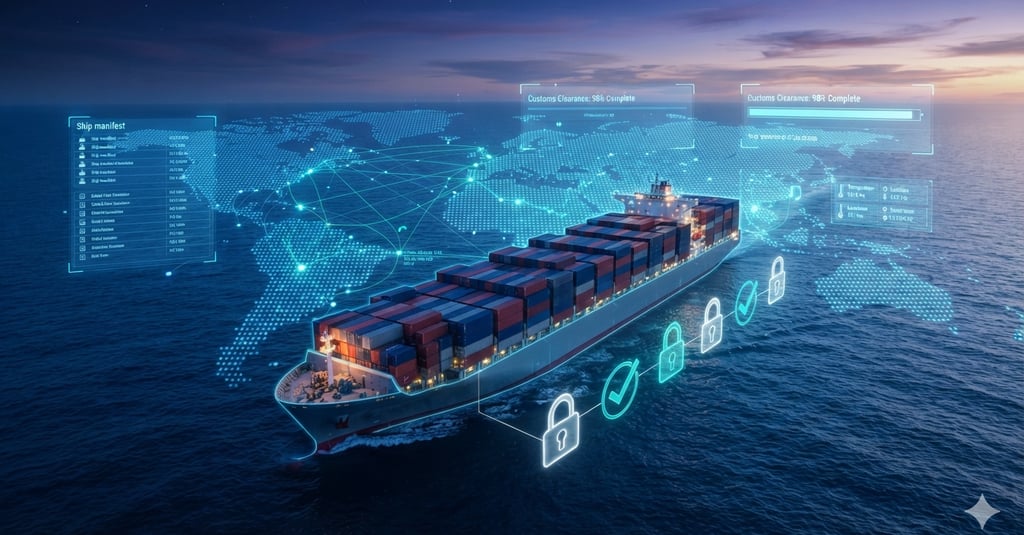
Navigating the Storm: How Smart Customs Clearance and Digital Freight Forwarding Reshaped Global Supply Chains
Navigating the Storm: How Smart Customs Clearance and Digital Freight Forwarding Reshaped Global Supply Chains
The global supply chain landscape is no longer just about moving a box from Point A to Point B. In recent years, the logistics sector has faced unprecedented volatility—from geopolitical shifts and sudden regulatory changes to unpredictable climate events affecting major shipping lanes like the Panama and Suez Canals. For businesses relying on international trade, the difference between profitability and a supply chain nightmare often comes down to two critical factors: digital freight forwarding and predictive customs clearance.
As we navigate this complex environment, traditional logistics methods are proving insufficient. To survive and thrive, importers and exporters must understand how technology, compliance automation, and strategic partnerships are redefining the movement of global cargo.
1. The New Paradigm of Global Logistics
For decades, the shipping industry relied heavily on legacy systems, manual paperwork, and fragmented communication. A single international shipment could involve dozens of intermediaries, hundreds of emails, and stacks of physical documents.
Today, that model is obsolete. The modern era demands absolute visibility. Digital freight forwarding has emerged not merely as a tech-savvy trend, but as an operational necessity. By integrating AI, real-time tracking, and cloud-based collaboration, digital forwarders allow businesses to monitor their cargo at every milestone.
Why Real-Time Visibility Matters
Proactive Risk Mitigation: If a vessel is delayed due to port congestion, automated systems immediately flag the delay, allowing logistics managers to reroute secondary inland transport.
Demurrage and Detention Cost Control: Container storage fees at ports can accumulate rapidly. Real-time alerts ensure that containers are picked up and returned within their designated free-time windows.
Enhanced Customer Experience: B2B buyers now expect the same transparency they experience as B2C consumers. Providing clients with accurate, real-time ETAs builds immense trust.
2. Demystifying Modern Customs Clearance: The Compliance Minefield
While physical transportation is complex, the regulatory hurdle of customs clearance is often where shipments face the most costly bottlenecks. Customs authorities worldwide are tightening regulations, updating tariff codes, and implementing stricter environmental and labor compliance checks.
A single error on a commercial invoice, an incorrect Harmonized System (HS) code, or missing country-of-origin documentation can lead to:
Expensive Customs Holds: Cargo stuck in limbo for days or weeks.
Severe Financial Penalties: Fines levied by customs border protection agencies for misclassification.
Seizure of Goods: In extreme cases of non-compliance, cargo can be confiscated or ordered for destruction.
The Role of HS Code Accuracy and AI
The Harmonized System (HS) code determines the exact duties and taxes applicable to a product. With millions of product variations, manual classification is highly prone to human error. Advanced customs brokerages are now utilizing machine learning algorithms to parse product descriptions and automatically suggest accurate HS codes, drastically reducing compliance risks.
3. The Digital Twin: Merging Freight Forwarding with Automated Customs
The most significant breakthrough in modern supply chain management is the seamless integration between freight forwarding operations and customs clearance workflows. Historically, these were treated as two distinct silos.
When freight data and customs compliance data live on the same digital platform, a "digital twin" of the shipment is created. This allows for pre-clearance—the process of submitting and approving customs documentation while the vessel is still in transit across the ocean.
4. Green Logistics and Carbon Accounting in Shipping
Sustainability is no longer a corporate buzzword; it is a regulatory mandate. Initiatives like the European Union’s Carbon Border Adjustment Mechanism (CBAM) and global maritime decarbonization targets are forcing shippers to account for their carbon footprint.
Smart freight forwarding platforms now include carbon calculators that analyze shipping routes, transport modes (Ocean, Air, Rail, Road), and vessel efficiencies. This data allows companies to:
Optimize routes not just for speed and cost, but for CO2 emissions.
Accurately report scope 3 emissions to regulatory bodies and stakeholders.
Choose eco-conscious carriers utilizing alternative fuels or modern, energy-efficient fleets.
5. Strategic Blueprint: Choosing the Right Logistics Partner
In a volatile market, choosing the right freight forwarding and customs clearance partner is a critical business decision. Organizations should evaluate potential logistics partners based on the following capabilities:
Authorized Economic Operator (AEO) Status
Working with a customs broker or forwarder that holds AEO status (or local equivalents like C-TPAT in the US) provides a distinct competitive advantage. AEO-certified entities are recognized by customs authorities as secure and compliant traders, resulting in fast-tracked clearance processes and significantly lower physical inspection rates.
Robust Digital Infrastructure
Ensure your partner offers an intuitive client portal featuring open APIs. This enables seamless integration directly into your internal Enterprise Resource Planning (ERP) systems (like SAP or Oracle), automating data transfers and eliminating manual data entry errors.
Local Expertise with Global Scale
While global networks are essential for securing ocean freight capacity, deep localized knowledge of port operations, local customs officials, and regional trucking regulations is what solves bottlenecks on the ground.
6. Conclusion: Building a Resilient Future
The future of global trade belongs to the agile. The traditional barriers between physical shipping and regulatory compliance are dissolving, driven by digitalization and the critical need for supply chain resilience.
By leveraging cutting-edge digital freight forwarding tools and adopting a proactive, technology-driven approach to customs clearance, businesses can transform their logistics from a vulnerable cost center into a powerful, predictable competitive advantage. Don't wait for the next global supply chain disruption to modernize your processes—the time to optimize your logistics strategy is now.


Get Your Free Logistics Consultation Today
Looking for a reliable logistics partner? Our experts are ready to help you optimize your shipping, customs clearance, and supply chain with tailored solutions for your business.




© 2026 Alshoulah. All rights reserved.
Address: Commercial City, District 4, Building A,1st Floor, 13
Mobile Number: 01157970111
Email: Company@alshoulah.net